


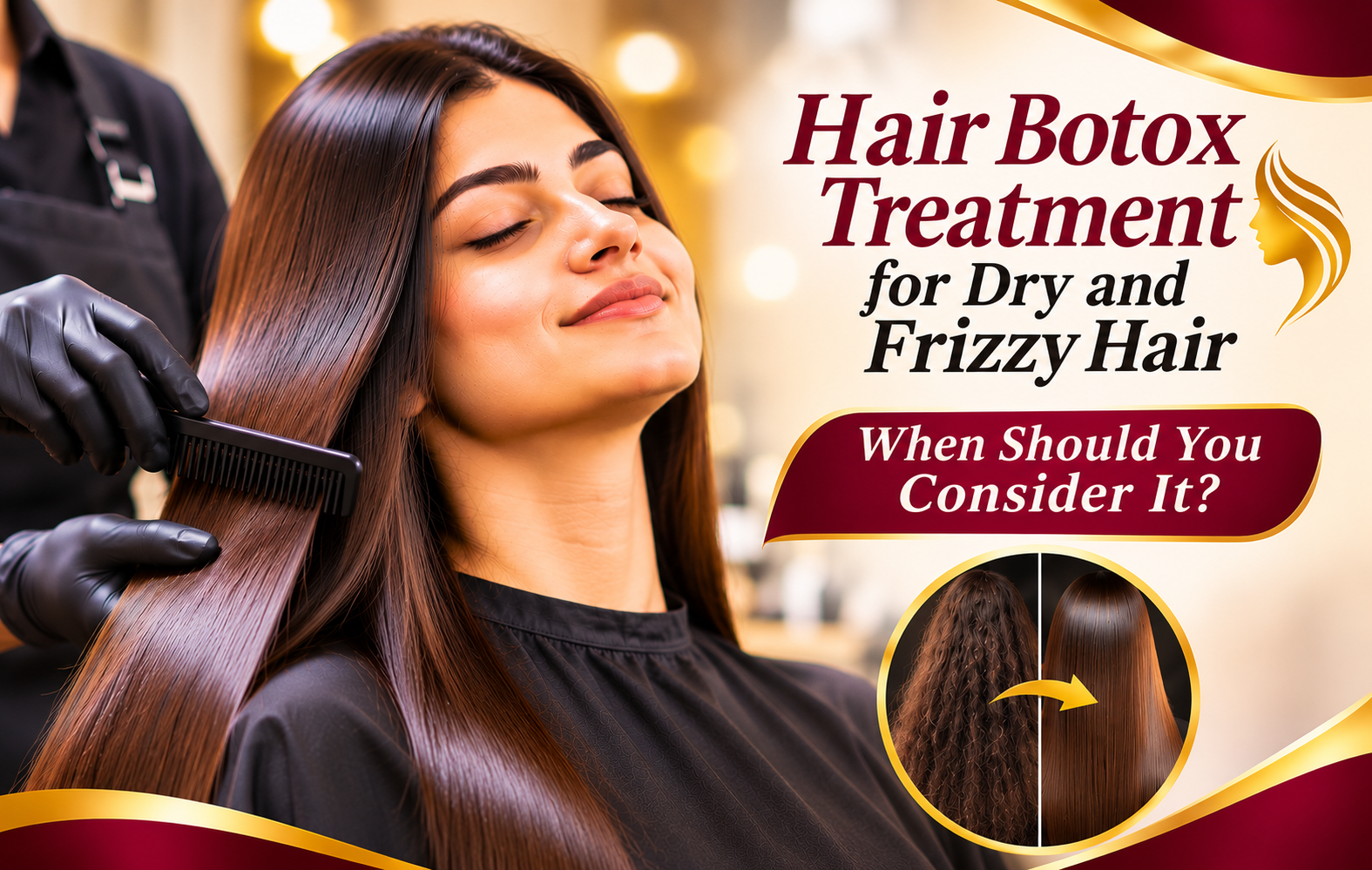
Hair Botox Treatment for Dry and Frizzy Hair: When Should You Consider It?
Dry, frizzy and rough hair can be difficult to manage, especially when regular washing, conditioning and styling do not provide the desired results. Exposure to heat, sunlight, pollution and chemical treatments can gradually affect the hair's outer protective layer, leaving it looking dull and feeling coarse.
For people dealing with these concerns, Hair Botox is one of the professional conditioning treatments worth considering. However, not every hair concern requires the same treatment.
Understanding when Hair Botox may be suitable can help you make an informed decision about your hair care routine.
What Is Hair Botox Treatment?
Hair Botox is a professional deep-conditioning treatment designed to improve the appearance and manageability of dry, rough and damaged hair.
Despite its name, Hair Botox does not involve injections or botulinum toxin. It generally uses conditioning ingredients that help smooth the hair surface, reduce the appearance of frizz and improve softness.
The exact ingredients and treatment process depend on the product used.
Unlike permanent hair straightening, Hair Botox primarily focuses on conditioning and improving the appearance of the hair. Some formulations may also produce a smoothing effect.
1. Your Hair Feels Dry Even After Conditioning
One of the common signs that your hair needs additional care is persistent dryness.
You may notice that:
-
Your hair feels rough after washing.
-
Regular conditioners provide only temporary softness.
-
Hair ends appear dry and dull.
-
Your hair becomes difficult to manage throughout the day.
Frequent heat styling, harsh cleansing products and environmental exposure can contribute to dryness.
A professional Hair Botox treatment may help improve softness by coating and conditioning the hair strands.
However, the results depend on your hair condition and the formulation used.
2. Frizz Makes Everyday Hair Styling Difficult
Frizz is a common concern for people living in warm and humid conditions.
When the hair's outer layer becomes uneven or damaged, moisture from the surrounding environment can contribute to swelling and frizz.
This may make your hair appear untidy even after brushing or styling.
When should you consider Hair Botox for frizzy hair?
You may consider a professional consultation when frizz remains difficult to manage despite using suitable conditioners, leave-in products and gentle styling techniques.
Hair Botox can help improve the smooth appearance of the hair and make everyday styling easier.
However, it does not permanently change your natural hair texture.
3. Your Hair Looks Dull and Lacks Natural Shine
Healthy-looking hair reflects light more evenly, giving it a smoother and shinier appearance.
When the hair surface becomes rough due to heat, colouring or environmental exposure, it may lose some of its natural shine.
Common signs include:
-
Hair appears lifeless despite regular washing.
-
The lengths look dull compared with the roots.
-
Hair feels rough when touched.
-
Styling products do not provide the expected finish.
Hair Botox treatments may improve the appearance of shine by conditioning and smoothing the hair surface.
The improvement is cosmetic, and maintaining it requires suitable aftercare.
4. Frequent Heat Styling Has Made Your Hair Rough
Hair dryers, straighteners and curling tools are commonly used to achieve different hairstyles.
However, frequent exposure to high temperatures can affect the hair's protective outer layer.
Over time, you may notice increased dryness, roughness, tangling and breakage.
If your hair feels difficult to manage after repeated heat styling, a professional conditioning treatment may be worth discussing with a hairstylist.
Hair Botox can help improve the feel and appearance of heat-stressed hair, but it cannot permanently repair severely damaged hair fibres.
Reducing excessive heat exposure is equally important.
5. Your Hair Has Become Difficult to Detangle
Hair that tangles easily can make daily brushing uncomfortable and time-consuming.
Dryness, split ends and surface damage can increase friction between hair strands.
You may experience:
-
Knots after washing.
-
Hair getting tangled during brushing.
-
Increased breakage while detangling.
-
Difficulty maintaining a neat hairstyle.
Professional conditioning treatments may help improve hair slip and reduce friction, making detangling easier.
For severely split or damaged ends, trimming may also be necessary.
6. Your Coloured Hair Needs Additional Conditioning
Hair colouring can give your appearance a fresh and stylish finish, but some colouring processes can also contribute to dryness and increased porosity.
If your coloured hair feels rough or lacks softness, you may consider a professional conditioning treatment.
However, not every Hair Botox formula is suitable for every type of coloured or chemically treated hair.
Before booking, inform your hairstylist about previous colouring, bleaching, straightening or other chemical services.
A professional can assess compatibility and recommend suitable care.
Hair Botox vs Regular Hair Spa: What Is the Difference?
Both Hair Botox and hair spa services can support the appearance and manageability of hair, but their treatment approaches may differ.
| Hair Botox Treatment | Regular Hair Spa |
|---|---|
| Focuses on intensive conditioning and smoothing | Commonly focuses on cleansing, conditioning and relaxation |
| May help reduce the appearance of frizz | May temporarily improve softness and manageability |
| Often involves a specialised conditioning formulation | Usually involves masks, massage and conditioning products |
| Results vary according to the product and hair condition | Results vary according to the products and service |
| May require specific aftercare | Usually involves routine hair care maintenance |
The right option depends on your hair condition, treatment history and expectations.
What Happens During a Professional Hair Botox Treatment?
Although the exact procedure varies between products and salons, a typical session may include the following stages.
Hair Consultation
The hairstylist assesses your hair texture, dryness, previous chemical treatments and styling habits.
This helps determine whether the treatment is appropriate.
Hair Cleansing
The hair may be washed with a suitable shampoo to remove product build-up and prepare it for treatment.
Product Application
The conditioning formulation is applied according to the manufacturer's instructions, usually focusing on the hair lengths.
Processing and Finishing
The product may be left on the hair for a specified period. Depending on the formulation, the process may include rinsing, blow-drying or controlled heat styling.
Not all Hair Botox products follow the same procedure.
Aftercare Guidance
Your hairstylist may recommend suitable shampoos, conditioners and styling practices to help maintain the results.
How Long Do Hair Botox Results Last?
The duration of Hair Botox results varies depending on the formulation, hair condition, washing frequency and aftercare routine.
Some professional treatments may provide a smoother appearance for several weeks, while others may last longer.
Results are temporary, and no specific duration can be guaranteed for every hair type.
Following the product-specific aftercare instructions can help maintain the treatment's cosmetic benefits.
How to Maintain Your Hair After Hair Botox Treatment
Good aftercare is important for maintaining softer, smoother and more manageable hair.
Use a suitable shampoo and conditioner: Choose products recommended for your hair type and treatment formulation.
Avoid unnecessary heat styling: Reduce frequent use of high-temperature styling tools and apply heat protection when needed.
Be gentle while detangling: Use a wide-tooth comb or suitable detangling brush, especially when your hair is wet.
Protect your hair from environmental exposure: Excessive sunlight, humidity and pollution can affect hair manageability.
Follow your stylist's washing instructions: Some formulations have specific recommendations regarding the first wash and ongoing maintenance.
Trim damaged ends when necessary: Conditioning can improve the appearance of hair, but it cannot permanently restore split ends.
Who Should Consult a Professional Before Hair Botox?
A professional consultation is particularly important if you have:
-
Recently bleached or chemically straightened hair.
-
Significant hair breakage or severe damage.
-
A sensitive or irritated scalp.
-
Known allergies to cosmetic hair products.
-
Hair loss or scalp concerns that require medical assessment.
Hair Botox is a cosmetic conditioning service, not a medical treatment for hair loss or scalp disease.
A patch test or strand test may be appropriate depending on the product and your hair history.
Professional Hair Botox Treatment in Vijayawada
If your hair feels persistently dry, rough or difficult to manage, a professional consultation can help you understand which conditioning treatment may suit your needs.
At Jawed Habib Hair & Beauty Salon, Vijayawada, you can enquire about Hair Botox treatment in Vijayawada and discuss your hair concerns, previous treatments and desired results before choosing a service.
A personalised approach can help you set realistic expectations and select appropriate hair care.
Final Thoughts
Hair Botox may be worth considering when dryness, frizz, dullness and tangling continue to affect your everyday hair routine.
While professional conditioning can improve softness, shine and manageability, it is important to understand that the results are temporary and depend on your hair's existing condition.
The best approach is to identify the reason behind your hair concerns and choose a treatment that matches your needs.
For guidance on professional hair conditioning and smoothing options, visit Jawed Habib Hair & Beauty Salon, Vijayawada.
Back
