


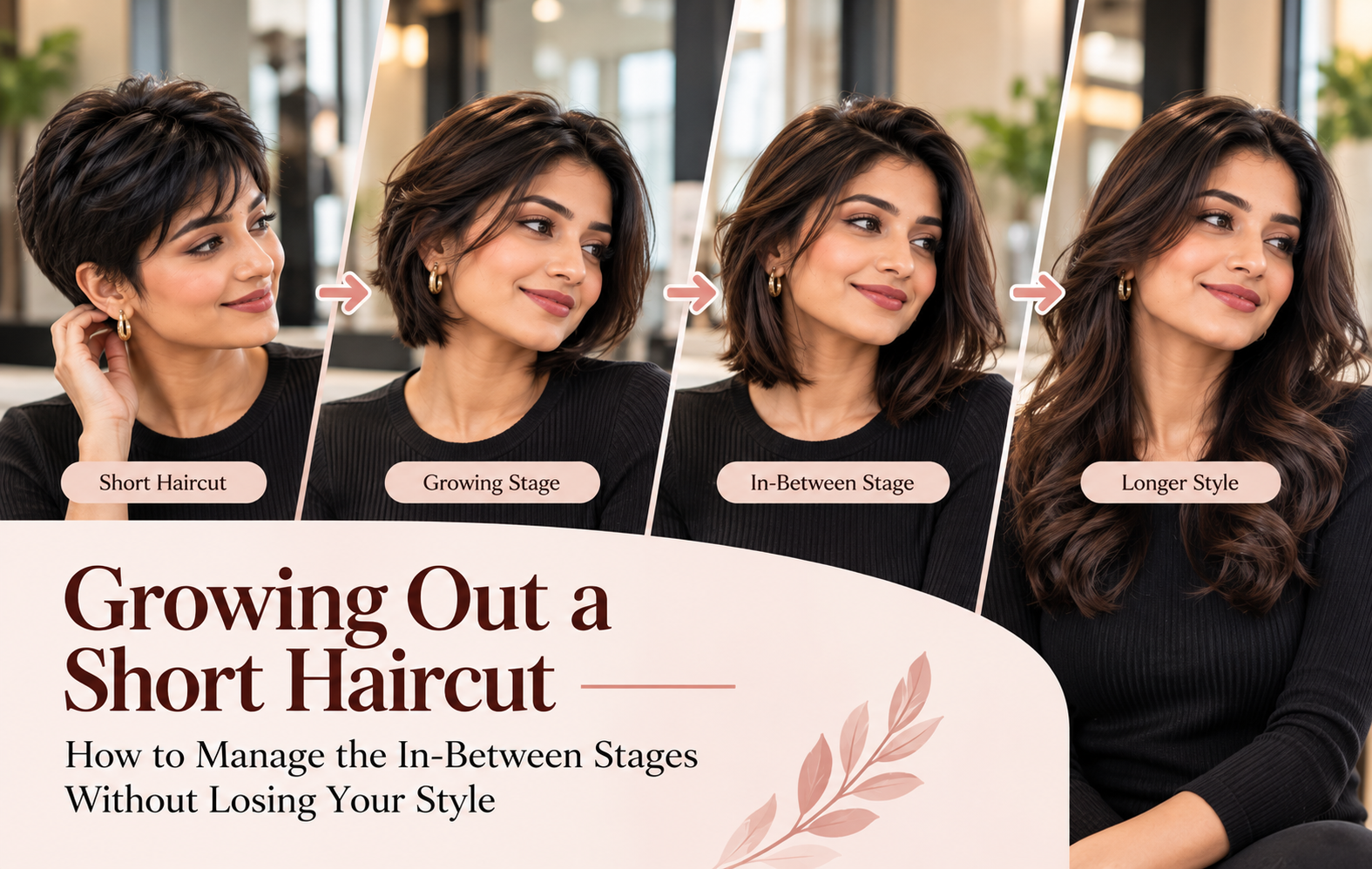
Growing Out a Short Haircut: How to Manage the In-Between Stages Without Losing Your Style
Growing out a short haircut can be exciting, especially when you are ready to try a longer hairstyle. However, the transition is not always easy. As your hair grows, you may notice uneven lengths, difficult-to-manage layers or sections that no longer sit the way they did after your last haircut.
Whether you are growing out a pixie cut, a short bob or a cropped hairstyle, the right hair care routine and occasional professional trims can help you maintain a neat appearance throughout the process.
For men and women in Vijayawada planning to grow their hair longer, understanding how to manage each stage can make the transition more comfortable.
Why Does Growing Out a Short Haircut Feel Difficult?
Short haircuts are usually designed around a particular length and shape. As the hair grows, that original structure gradually changes.
For example, a short layered haircut may begin to look uneven as different sections reach new lengths. Hair around the ears and neckline may become difficult to manage, while the fringe may start falling over the eyes.
Some common challenges include:
-
Uneven hair lengths
-
Hair sticking out around the ears
-
Overgrown fringes
-
Layers losing their original shape
-
Difficulty maintaining the hairstyle
-
Hair looking bulky in certain areas
-
Increased styling time
These changes are normal during the growing-out process. Instead of cutting everything short again, small adjustments can help you move towards your preferred length.
1. Decide Which Hairstyle You Want to Grow Into
Before growing your hair longer, think about the hairstyle you want to achieve.
Are you planning to move from a pixie cut to a bob? Do you want to grow a short bob into shoulder-length hair? Or are you growing out a short men's haircut to achieve a longer, textured hairstyle?
Having a clear goal makes it easier to decide which sections should be left to grow and which areas may need occasional reshaping.
You can also show your hairstylist reference photographs of your preferred final hairstyle.
2. Understand the Different Hair Growth Stages
Hair grows gradually, and the transition will depend on your current haircut, hair texture and desired length.
From a Pixie Cut to a Short Bob
Growing out a pixie cut often involves managing shorter sections around the sides and back.
As the hair becomes longer, the neckline may need occasional tidying while the upper sections continue growing.
A professional stylist can help balance the shape without removing unnecessary length.
From a Short Bob to Shoulder-Length Hair
A bob may begin to lose its defined shape as it approaches the shoulders.
During this stage, the ends may turn outwards or sit differently depending on your hair texture.
Simple styling adjustments and occasional reshaping can help the haircut look intentional.
From a Short Men's Haircut to Medium-Length Hair
Men growing out short hairstyles may notice extra volume around the ears, sides and neckline.
Instead of repeatedly cutting the sides very short, ask your stylist to maintain a balanced shape while allowing the overall length to increase.
3. Avoid Cutting Too Much During the Transition
One of the most common mistakes when growing out short hair is cutting too much whenever the hairstyle becomes difficult to manage.
Although regular maintenance can be helpful, removing too much length may delay your progress.
Explain your hair growth goal before every salon appointment.
Your hairstylist can then focus on tidying specific areas, balancing the shape and removing visibly damaged ends when necessary.
4. Manage Overgrown Fringes Carefully
Fringes can become difficult to manage when growing out a short haircut.
As the fringe reaches the eyebrows or eyes, it may start affecting your everyday comfort.
Instead of cutting it back to its original length, consider temporary styling options such as:
-
Side-swept fringes
-
Soft curtain-style fringes
-
Small hair clips
-
Hairbands
-
Gentle blow-drying to redirect the hair
These options can help you manage the fringe while allowing it to grow.
5. Use Simple Hairstyles During the Awkward Stage
You do not need to wait until your hair reaches its final length to enjoy different hairstyles.
Small styling changes can help you maintain a neat appearance during the transition.
For Women
Depending on your hair length, you can try:
-
Side-parted hairstyles
-
Half-up hairstyles
-
Soft waves
-
Small hair clips
-
Low ponytails when the length allows
-
Hairbands for shorter sections
For Men
Suitable options may include:
-
Textured side-part hairstyles
-
Natural brushed-back styles
-
Soft middle-part hairstyles
-
Lightly styled medium-length looks
Choose hairstyles that work with your current length instead of forcing your hair into a style it cannot comfortably hold.
6. Maintain a Suitable Hair Care Routine
Hair care becomes particularly important when you are planning to grow your hair longer.
A simple routine can help reduce avoidable breakage and make your hair easier to manage.
Use Shampoo Suitable for Your Hair Type
Choose a shampoo based on your scalp condition and hair needs.
Avoid unnecessarily harsh washing or excessive scrubbing.
Condition Your Hair Regularly
Conditioner can help improve smoothness and reduce tangling, particularly as your hair becomes longer.
Apply it according to your hair type and the product instructions.
Detangle Gently
Avoid pulling aggressively through knots.
Start from the ends and work gradually upwards, especially when dealing with longer or fragile sections.
Limit Excessive Heat Styling
Frequent use of high-temperature styling tools can contribute to dryness and breakage.
Use appropriate heat protection when styling and avoid unnecessary heat exposure.
7. Learn to Work With Your Natural Hair Texture
Your natural hair texture can influence how your growing haircut looks.
Straight hair may show uneven lengths more clearly, while wavy or curly hair may develop additional volume as it grows.
Rather than trying to change your natural texture every day, choose styling methods that work with it.
For example, someone with naturally wavy hair may find that soft layers and suitable styling products help manage the transition.
A professional hairstylist can recommend a shape that complements your hair texture at its current length.
8. Know When to Visit the Salon
Growing your hair longer does not mean you need to avoid the salon completely.
Occasional appointments can help maintain the haircut's shape while allowing you to work towards your preferred length.
You may consider a salon visit when:
-
The neckline looks untidy
-
The sides become difficult to manage
-
Your fringe affects your vision
-
The hairstyle loses its balance
-
The ends appear visibly split or damaged
-
You need guidance for the next growth stage
The frequency of appointments depends on your hairstyle and personal preferences.
9. Avoid Common Hair Growth Mistakes
A few everyday habits can make the growing-out process more difficult.
Frequently Changing Your Hair Growth Goal
Switching between growing your hair longer and cutting it short can make progress inconsistent.
Choose a realistic hairstyle goal and give yourself time to reach it.
Using Too Many Styling Products
Applying excessive styling products may leave your hair feeling heavy or difficult to manage.
Use only what is suitable for your hair type and desired style.
Ignoring Damaged Ends
Split ends cannot be permanently repaired by styling products. If they become noticeable, a small trim may be appropriate.
Comparing Your Hair Growth With Others
Hair growth varies between individuals.
Genetics, age, health and other factors can influence growth rates. Focus on maintaining your hair rather than expecting it to reach a particular length within a fixed period.
10. Ask Your Hairstylist for a Transition Haircut
A transition haircut is designed to help your hair look balanced while you grow it towards a longer style.
Unlike a major haircut, it focuses on managing the current shape without unnecessarily removing the length you want to keep.
Depending on your hair, a stylist may suggest:
-
Light neckline adjustments
-
Balancing uneven sections
-
Softening bulky areas
-
Adjusting the fringe
-
Refining existing layers
-
Removing damaged ends where necessary
The objective is to maintain a presentable hairstyle while supporting your longer-term styling goal.
Professional Haircut Services in Vijayawada
If you are growing out a short haircut, professional guidance can help you manage the changing shape of your hair.
At Jawed Habib Hair & Beauty Salon, you can explore professional haircut services in Vijayawada for men and women.
Whether you want to maintain a short bob, reshape growing layers or move towards a longer hairstyle, discussing your goals with a professional stylist can help you choose suitable haircut adjustments.
Remember to explain that you are growing your hair longer before the stylist begins cutting.
Conclusion: Grow Your Hair Without Losing Your Style
Growing out a short haircut requires patience, but the in-between stages do not have to look untidy.
By choosing a clear hairstyle goal, managing your fringe, using simple styling techniques and maintaining a suitable hair care routine, you can keep your hair looking neat as it grows.
Occasional professional reshaping can also help you maintain a balanced haircut without sacrificing unnecessary length.
For professional haircut guidance and styling options during your hair growth journey, visit Jawed Habib Hair & Beauty Salon, Vijayawada.
Back
