


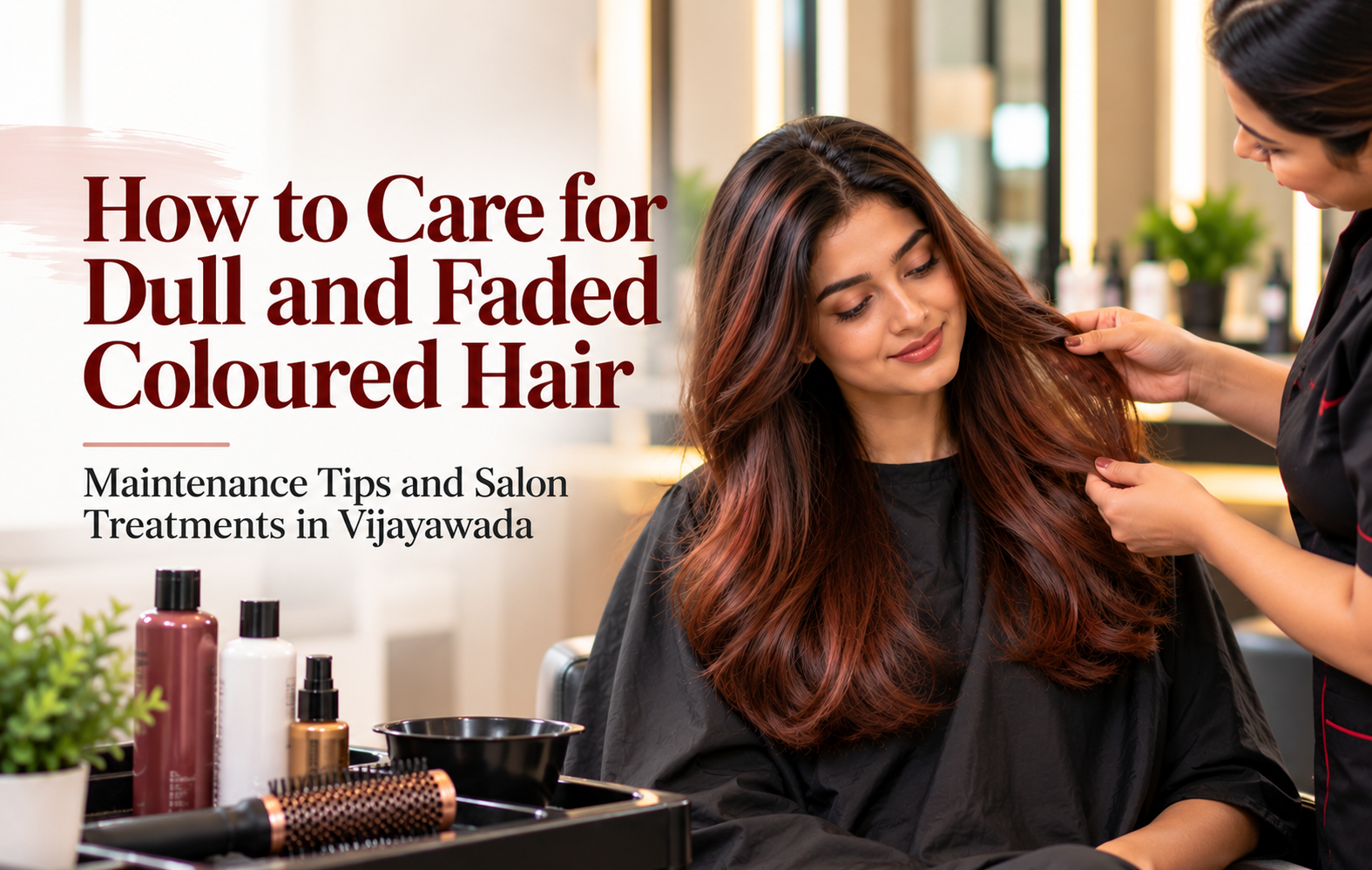
How to Care for Dull and Faded Coloured Hair
Hair colouring can give your appearance a fresh and stylish look. Whether you choose subtle brown highlights, a rich burgundy shade or a complete hair colour transformation, maintaining the colour is important for keeping your hair looking vibrant.
However, after a few weeks, coloured hair may begin to look dull, dry or faded. The shade may lose its original richness, and the hair may no longer have the same smooth finish it had immediately after colouring.
If you have recently coloured your hair or are planning to refresh an existing shade, understanding the reasons behind colour fading can help you make better hair care decisions.
Here are some practical maintenance tips and professional treatment options for managing dull and faded coloured hair in Vijayawada.
Why Does Coloured Hair Become Dull and Faded?
Hair colour does not always remain as vibrant as it looks immediately after a salon appointment.
Several everyday factors can contribute to colour fading and changes in hair texture.
Frequent Hair Washing
Washing your hair too frequently can gradually reduce the intensity of certain hair colours, particularly semi-permanent and temporary shades.
The effect depends on the colouring product, hair condition and washing routine.
Excessive Heat Styling
Regular use of straighteners, curling irons and high-temperature blow-drying can contribute to dryness and colour fading.
Hair that becomes dry or damaged may also appear less shiny.
Sun Exposure
Prolonged exposure to sunlight can affect the appearance of coloured hair.
UV radiation may contribute to changes in hair colour and damage to the hair fibre.
Unsuitable Hair Care Products
Some cleansing products may be too harsh for coloured or chemically treated hair.
Using products that do not suit your hair type can leave it feeling rough or difficult to manage.
Hair Porosity and Previous Treatments
Hair that has undergone bleaching, repeated colouring or other chemical treatments may be more porous.
Porous hair can lose certain colour pigments more quickly and may require additional conditioning care.
1. Choose a Shampoo Suitable for Coloured Hair
One of the simplest ways to maintain coloured hair is to use a shampoo formulated for colour-treated hair.
These products are generally designed to cleanse the hair while supporting its appearance and condition.
When choosing a shampoo, consider:
-
Your hair colour and colouring method
-
Whether your scalp is oily or dry
-
The condition of your hair
-
Any previous chemical treatments
-
Recommendations from your hairstylist
Avoid assuming that every product labelled colour-protecting will work equally well for your hair.
A professional stylist can help you select suitable products based on your colouring history.
2. Avoid Washing Your Hair More Often Than Necessary
Frequent shampooing may contribute to faster fading of some hair colours.
However, reducing washing too much can also lead to oil and product build-up on the scalp.
The right washing frequency depends on your scalp condition, lifestyle and hair texture.
For example, people who sweat frequently may need a different routine from those with a relatively dry scalp.
Use lukewarm water rather than very hot water when washing your hair, as excessive heat can contribute to dryness.
3. Use Conditioner to Maintain Smoothness and Shine
Conditioner plays an important role in managing coloured hair.
Colouring processes can sometimes leave the hair feeling dry, especially when lightening or bleaching is involved.
A suitable conditioner can help:
-
Improve hair smoothness
-
Reduce tangling
-
Make the hair easier to comb
-
Reduce friction during styling
-
Improve the appearance of shine
Apply conditioner mainly to the lengths and ends unless the product instructions recommend otherwise.
For very dry hair, your hairstylist may suggest a suitable conditioning mask or salon treatment.
4. Reduce Excessive Heat Styling
Heat styling can help you achieve different hairstyles, but repeated exposure to high temperatures may affect coloured hair.
If you regularly use straighteners, curling tools or blow-dryers, consider making a few changes.
-
Use the lowest effective heat setting.
-
Apply a suitable heat-protection product.
-
Avoid repeatedly passing hot tools over the same section.
-
Allow your hair to air-dry partially when practical.
-
Reduce unnecessary daily heat styling.
These habits can help minimise additional damage and maintain a smoother appearance.
5. Protect Coloured Hair From Sun Exposure
Vijayawada experiences periods of strong sunshine and high temperatures, making sun protection a useful part of everyday hair care.
Long periods outdoors may contribute to colour changes and dryness.
To help protect your hair:
-
Wear a hat or scarf during prolonged sun exposure.
-
Avoid unnecessary exposure during periods of intense sunlight.
-
Consider hair products formulated with UV-protective ingredients.
-
Keep your hair appropriately conditioned.
Sun protection does not completely prevent colour fading, but it can help reduce avoidable environmental exposure.
6. Understand the Difference Between Colour Fading and Hair Damage
Dull-looking coloured hair does not always mean that the colour itself needs to be reapplied.
Sometimes, the problem is related to dryness, roughness or damage to the hair surface.
Signs of Colour Fading
-
The shade looks lighter than before.
-
The original colour appears less intense.
-
Highlights develop unwanted warm or brassy tones.
-
Previously coloured sections look uneven.
Signs of Dry or Damaged Hair
-
Hair feels rough to the touch.
-
The ends appear dry or split.
-
Hair tangles more easily.
-
The surface looks less smooth.
-
Hair breaks during combing or styling.
Understanding the difference can help you choose between colour-refresh services and treatments focused on improving hair condition.
7. Consider a Professional Hair Conditioning Treatment
When coloured hair looks dull because of dryness or roughness, a professional conditioning treatment may help improve its appearance.
Depending on the hair's condition, a hairstylist may recommend a moisturising or conditioning service.
These treatments may help improve softness, manageability and temporary smoothness.
However, conditioning treatments cannot permanently repair severely damaged hair or restore all lost colour pigments.
The most suitable option depends on the condition of your hair and its previous chemical treatments.
8. When Should You Consider a Colour-Refresh Treatment?
If your hair remains in reasonable condition but the shade has faded, a professional colour-refresh service may be worth considering.
A hairstylist can assess the existing colour and discuss suitable options.
Hair Glossing
A glossing service may help enhance shine and adjust the appearance of certain hair tones.
The result depends on the product used and the existing hair colour.
Hair Toning
Toning may be recommended when highlights or lightened hair develop unwanted yellow, orange or brassy tones.
A toner helps adjust the appearance of these tones but does not necessarily return the hair to its original shade.
Root Touch-Ups
If your main concern is visible natural hair growth near the roots, a root touch-up may be more appropriate than colouring the entire length again.
Colour Correction
Uneven or significantly altered hair colour may require a professional colour correction consultation.
Colour correction can involve multiple steps, and the suitability of the procedure depends on the hair's condition.
Avoid repeatedly applying colour at home without understanding how the products may interact with previous treatments.
9. Avoid Recolouring Your Hair Too Frequently
When hair colour begins to fade, applying another full colour treatment immediately may seem like the easiest solution.
However, repeated chemical processing can increase the risk of dryness, breakage and hair damage.
Before recolouring, consider:
-
How recently your hair was coloured
-
Whether bleaching was involved
-
The current condition of your hair
-
Whether the problem is fading or dryness
-
Whether a toner or gloss could achieve the desired result
A professional hairstylist can assess whether your hair is suitable for another colouring procedure.
Always follow appropriate allergy-testing and product safety instructions before using hair colour.
10. Maintain a Simple Weekly Hair Care Routine
Maintaining coloured hair does not necessarily require a complicated routine.
A few consistent habits can make a noticeable difference to how your hair looks and feels.
During Hair Washing
Use a suitable shampoo and follow with conditioner.
Avoid excessive scrubbing of the hair lengths.
After Washing
Gently remove excess water using a soft towel.
Avoid rubbing wet hair aggressively.
Before Styling
Detangle carefully and use suitable heat protection when needed.
During the Week
Pay attention to dryness, tangling and changes in the appearance of your colour.
When Necessary
Consider a professional consultation if the colour becomes uneven or the hair begins to show significant damage.
The aim is to maintain healthy-looking hair while reducing unnecessary chemical and heat exposure.
11. Common Mistakes That Can Make Coloured Hair Look Dull
Certain everyday habits may contribute to colour fading or make the hair appear less vibrant.
Using Very Hot Water
Excessively hot water may increase dryness and affect the appearance of coloured hair.
Skipping Conditioner
Hair that lacks sufficient conditioning may look rough and lose its smooth finish.
Overusing Styling Tools
Frequent high-temperature styling can contribute to damage.
Applying Colour Repeatedly Without Guidance
Unnecessary chemical processing can weaken the hair.
Ignoring Hair Texture
Products that work well for straight hair may not be ideal for curly, wavy or heavily processed hair.
Expecting Every Treatment to Restore Colour
Conditioning treatments and colour-refresh services serve different purposes.
Choosing the right option begins with understanding what your hair actually needs.
12. When Should You Consult a Professional Hairstylist?
Consider professional guidance when:
-
Your colour fades unevenly.
-
Highlights become excessively brassy.
-
Your hair feels unusually dry after colouring.
-
You notice increased breakage.
-
The existing shade no longer matches your preferred look.
-
You are considering another chemical treatment.
-
You are unsure whether to choose toning, glossing or recolouring.
A hairstylist can review your previous colouring history and suggest suitable next steps.
If you experience scalp burning, persistent irritation, swelling or a suspected allergic reaction after colouring, seek medical advice rather than attempting another salon treatment.
Professional Hair and Skin Treatments in Vijayawada
If your coloured hair has become dull, dry or difficult to manage, a professional consultation can help you understand the available care options.
Jawed Habib Hair & Beauty Salon offers hair and skin treatments in Vijayawada, including services related to hair care and colour improvement.
Whether you are concerned about fading, dryness or maintaining your preferred hair shade, discussing your hair's condition and previous treatments with a professional stylist can help you make an informed decision.
Before choosing any chemical treatment, ask about its suitability, expected results and recommended aftercare.
Conclusion: Keep Your Coloured Hair Looking Fresh and Well-Maintained
Dull and faded coloured hair does not always require another full colouring session.
Sometimes, adjusting your washing routine, using suitable conditioning products and reducing excessive heat styling can improve the appearance of your hair.
When the colour itself has changed, professional toning, glossing or colour-refresh services may be worth discussing with a hairstylist.
The right approach depends on your hair's condition, the type of colour used and your preferred result.
For professional guidance on maintaining coloured hair and exploring suitable salon treatments, visit Jawed Habib Hair & Beauty Salon, Vijayawada.
Back
